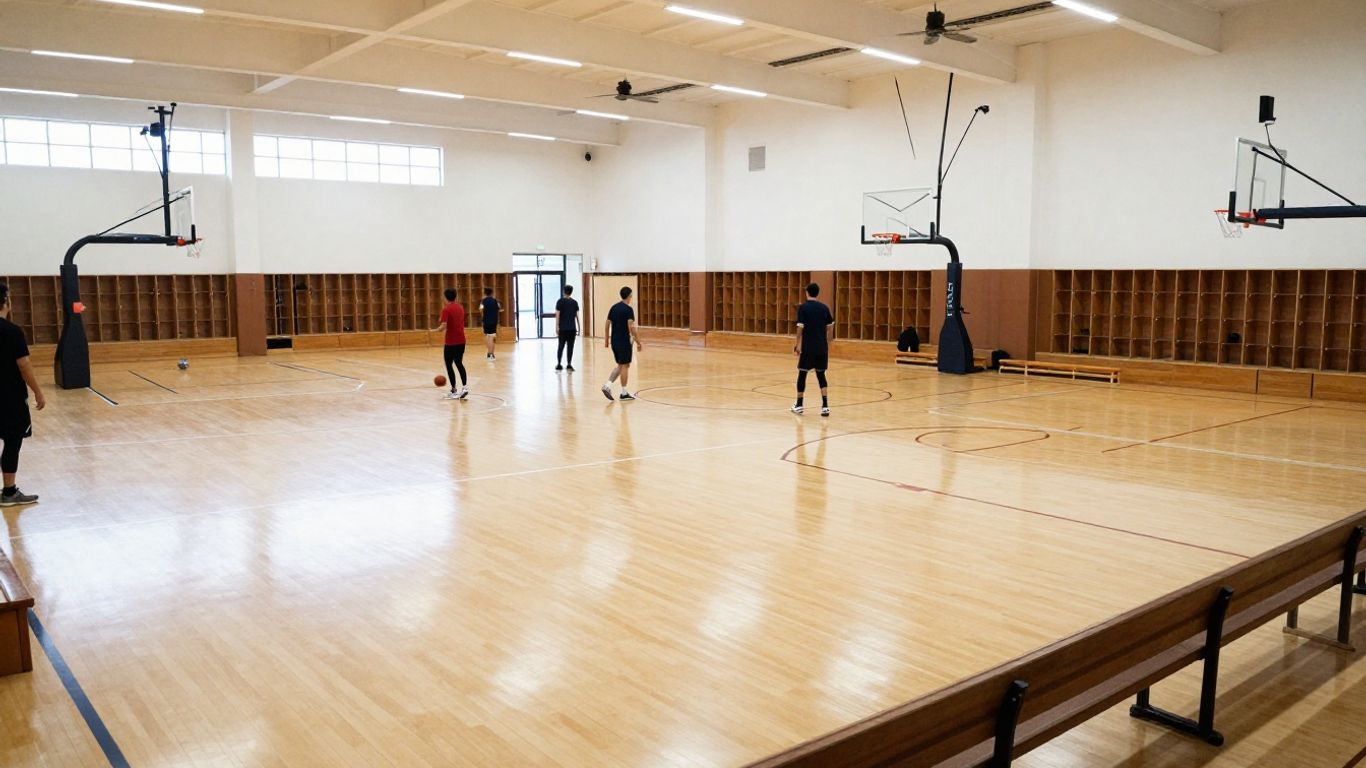
Key Takeaways
I get better results from an indoor courts finder when I decide what I need before I start browsing. A little preparation makes it easier to compare facilities, avoid booking surprises, and choose a court that suits the session I have in mind.
- Decide on the sport, court type, location, timing, and session length first.
- Compare playing conditions, access, amenities, pricing, and rental rules.
- Use filters for distance, availability, surface, equipment, and booking size.
- Confirm the facility’s current terms before paying or travelling.
- Save suitable venues so future bookings take less time.
Define your court needs before searching
A search becomes much more useful when I know what a successful booking looks like. I start with the practical details rather than opening every nearby result and hoping one fits. The right indoor court depends on the activity, the people attending, and the conditions I am prepared to accept. Writing those preferences down also gives me a fair way to compare venues later.
Choose the sport and court type
I begin by naming the sport and the type of court it requires. A full basketball court, a half court, a tennis court, and a multi-use space can all appear in a broad search, but they will not offer the same playing experience. I also check whether I need a marked competition court, a training area, or simply enough room for casual shooting and drills.
If I am arranging a local league session, I look beyond the word “indoor” and confirm the court dimensions, markings, hoops, nets, and other equipment. For a relaxed session, I may accept a shared or adaptable space. Being clear about that distinction prevents me from paying for a facility that is impressive but unsuitable.
Identify the preferred location and travel radius
I choose a practical travel radius before I search. A venue a few kilometres farther away may have better availability, but the extra journey can become tiring when several players are coming from different suburbs. I consider public transport, driving time, parking, and the likely return trip, not just the distance shown on a map.
For group bookings, I ask where most players are travelling from. The most convenient venue is often the one that keeps the total journey reasonable for everyone, even if it is not the closest option to me. That small bit of planning can improve attendance and reduce late arrivals.
Set your date, time, and duration
I decide whether I need a one-off booking, a regular weekly slot, or several sessions across a season. Then I choose a preferred time and one or two acceptable alternatives. Indoor courts can be busy after work, on weekends, and around school holidays, so flexibility gives me more options.
I also allow time for arrival, warm-up, equipment collection, and packing up. A short booking may look cheaper, but it can feel rushed if players need to change or if the facility expects the court to be cleared promptly. I check whether the listed duration refers only to playing time.
Decide which amenities matter most
Amenities are useful when they solve a real problem, not simply because they appear on a listing. I make a short priority list before comparing venues so that attractive extras do not distract me from the basics. My priorities might include:
- Reliable lighting for clear visibility across the court.
- Changing rooms, toilets, showers, or storage for personal items.
- Parking or public transport access that suits the group.
- Equipment hire, seating, accessibility features, or spectator space.
Once I separate essential features from nice-to-have additions, the search becomes less overwhelming. I can then judge each venue against the same needs instead of changing my criteria every time I see a new listing.
Compare indoor court facilities
A listing rarely tells me everything I need to know about the playing experience. I compare the facility itself, including the court surface, lighting, air quality, access arrangements, and the way bookings are managed. A convenient venue can still disappoint if the court is worn or the surrounding space is poorly maintained.
I also look for recent information and clear photographs, while remembering that images may not show the whole facility. Where details are vague, I treat that as a reason to verify them rather than an invitation to guess.
Review court quality and playing conditions
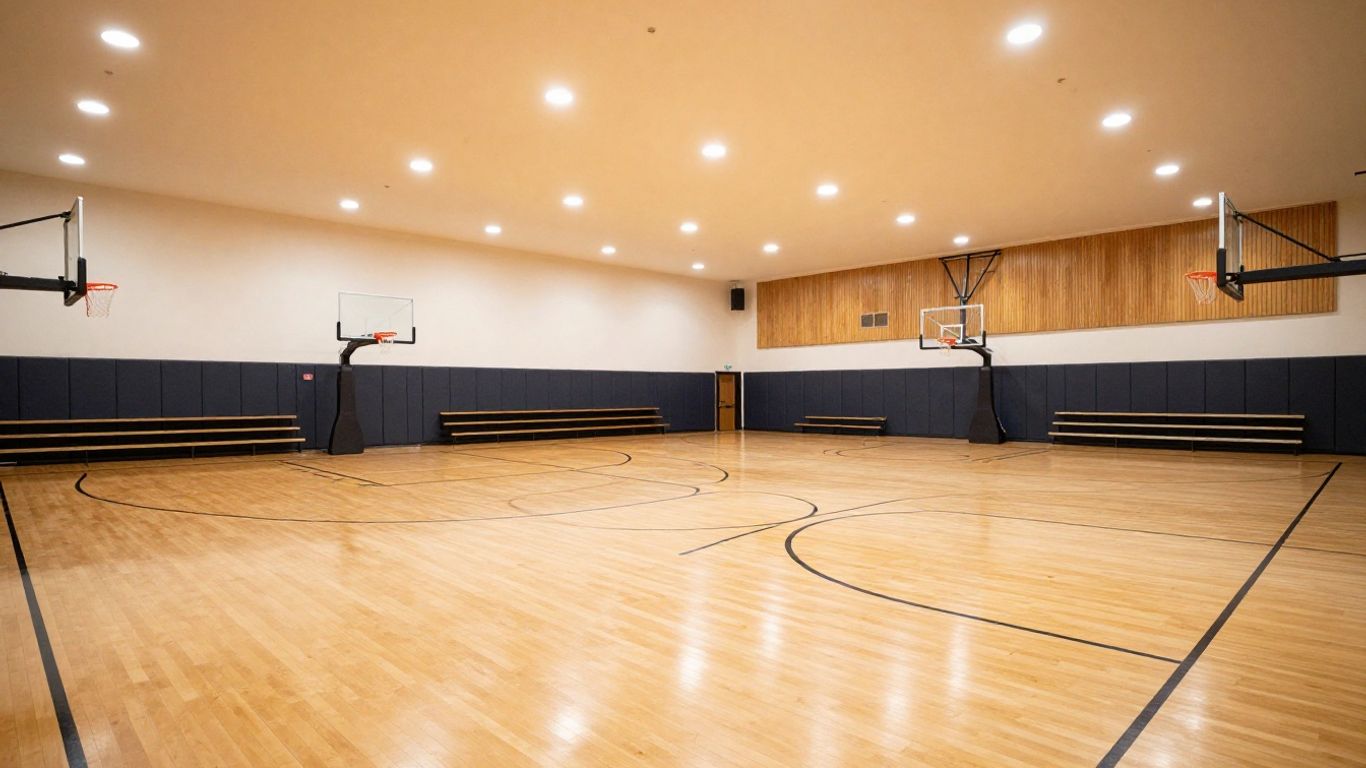
The surface is one of the first details I check because it affects movement, traction, and confidence. I look for information about the surface type, visible wear, court markings, and whether the space is shared with other activities. If photographs are available, I inspect the floor, hoops, backboards, nets, and the area around the court.
I also consider noise and space around the playing area. A court may technically meet my needs but feel cramped if walls, pillars, or nearby activities are close to the sidelines. For competition or serious practice, consistent playing conditions matter more than a polished reception area.
Check lighting, temperature, and ventilation
Good lighting should make it easy to follow the ball without harsh glare or dark patches. I check whether the venue mentions lighting, and I ask directly if photographs do not show the ceiling or court clearly. I also consider whether the facility has natural light, because bright windows can create visibility issues at certain times of day.
Temperature and ventilation matter during a long session, particularly when several players are moving continuously. I do not assume that an indoor venue will automatically feel comfortable. If I have played there before, I use that experience; otherwise, I ask how the space is ventilated and whether conditions vary during busy periods.
Evaluate locker rooms, parking, and accessibility
I check the practical parts of the visit as carefully as the court. That includes the entrance, toilets, changing areas, parking arrangements, lift access, accessible paths, and seating for anyone watching. If a player has specific access requirements, I contact the venue rather than relying on a general accessibility label.
For a group, I also consider how people will gather before the booking and leave afterwards. Clear arrival instructions can be as helpful as a large car park. I note any restrictions on parking, building access, or after-hours entry before confirming the reservation.
Compare pricing, memberships, and rental policies
Price is only one part of the value. I check whether the listed amount is hourly, per court, or per person, and whether taxes, equipment, deposits, or other charges are added later. Membership pricing can make sense for regular players, while casual renters may prefer a straightforward one-off rate.
A simple comparison table helps me see the trade-offs without treating the cheapest option as automatically best.
| Booking detail | What I check | Why it matters |
|---|---|---|
| Court rate | Hourly, session-based, or per player | Shows the likely total cost |
| Extra charges | Equipment, deposits, or cleaning fees | Prevents surprises at checkout |
| Membership | Joining cost and member rate | Helps regular players compare value |
| Rental terms | Minimum duration and booking limits | Confirms the session fits my plans |
After comparing these details, I look at the total cost for the actual group and session. A slightly higher rate may be worthwhile if it includes better access, equipment, or a more suitable court, but I want that difference to be clear before I pay.
Filter search results effectively
Search filters save time, but only when I use them in a sensible order. I start broad enough to see the available options, then narrow the results according to the details that matter most. If I apply every filter immediately, I may miss a suitable venue whose listing uses different wording.
I usually filter by location and timing first, then refine the results by court type, surface, equipment, and booking format. I read the remaining listings rather than assuming a filter has confirmed every detail.
Use location and distance filters
I enter the suburb, postcode, or area where I want to play and then adjust the distance gradually. Starting with a tight radius gives me a realistic first view, while widening it helps if availability is limited. I compare the map with the written address because a venue near a boundary can be less convenient than it looks.
For recurring sessions, I give travel time more weight than I might for a one-off event. A venue that is easy to reach every week can be the better choice even if another facility has a slightly nicer court.
Narrow results by availability
I search for the actual date and time before becoming attached to a particular facility. A venue may look ideal but offer no suitable sessions when I need them. If the search allows several time windows, I include my preferred option and realistic alternatives.
I also check whether the displayed availability is for the whole court or only a partial booking. Some systems show an open time without making the booking length obvious. I read the result carefully and move on quickly when the available slot cannot accommodate the session.
Search by court surface and equipment
Surface and equipment filters are useful when the activity depends on a particular setup. I look for the court material, markings, hoops, nets, goals, lighting, and any equipment available to hire. I do not assume that a facility has the correct gear simply because it supports the sport.
When a filter produces very few results, I remove one preference at a time. That helps me see whether the restriction is genuinely necessary or whether a nearby alternative would work just as well.
Check whether the facility supports individual or group bookings
I confirm how the venue defines a booking. Some facilities may accept one player, while others expect a full group or charge for the entire court regardless of attendance. I also check whether a group organiser can invite participants, assign names, or share payment details through the booking process.
This distinction matters for local leagues and informal sessions alike. Before I reserve, I look for:
- The maximum number of players or participants.
- Whether the fee covers the court or each individual.
- Rules for spectators, coaches, and late arrivals.
- Whether recurring group sessions can be arranged.
Those details tell me whether the booking system matches the way I plan to use the facility. They also reduce the risk of arriving with more people than the venue permits.
Verify booking and facility details
A search result is a starting point, not a guarantee that every detail is current. Before I pay, I review the facility page, booking summary, and confirmation information together. I want the address, time, court type, cost, and cancellation terms to agree.
This final check is especially useful when a third-party listing or older page appears in search results. If anything is unclear, I pause the booking rather than relying on an assumption.
Confirm real-time availability
I look for a live calendar or a booking screen that confirms the selected slot before payment. If the system only displays general opening hours, I treat that as different from confirmed court availability. I also check whether another user could reserve the slot while I am completing the process.
After booking, I save the confirmation and review it for the exact date, start time, finish time, and court or area. A confirmation email is useful evidence of what I booked, but I still contact the facility if the details are incomplete.
Review cancellation and rescheduling rules
I read the cancellation window, refund conditions, transfer rules, and rescheduling process before I commit. Some policies may differ for peak and off-peak bookings or for members and casual users. I check whether weather, facility closures, or maintenance are handled separately.
I do not assume that cancelling a booking automatically returns every charge. If the policy is written in broad terms, I ask what would happen if a player became unavailable or the group needed to move the session.
Check guest policies and payment requirements
I confirm whether guests need to be named in advance and whether spectators can enter the facility. I also check age requirements, identification rules, deposits, accepted payment methods, and when payment is due. These details are easy to overlook when I am focused on finding an open court.
For a group, I decide who will make the booking and keep the confirmation. Clear responsibility avoids duplicated reservations and makes it easier to handle changes if plans shift.
Contact the facility about missing information
I contact the facility when the listing does not answer a question that could affect the session. I keep the message specific, asking about the court surface, equipment, access, lighting, booking duration, or current availability rather than sending a general request.
I record the answer with the booking details, especially if it changes what the listing suggests. A short conversation before payment can save a long trip to a court that does not suit the group.
Choose the best indoor court for your activity
The best venue is not necessarily the closest or the least expensive. I choose it by matching the facility to the purpose of the booking, the ability of the players, and the level of organisation needed. A court for casual recreation may not need the same features as one for a competitive fixture.
I also think about how the venue will feel in practice: whether players can arrive calmly, whether the court stays available for the full session, and whether the overall arrangement is easy to repeat.
Match the facility to practice, competition, or recreation
For individual practice, I may prioritise access, a quiet environment, and the right equipment. For a competition, I look more closely at court dimensions, markings, seating, lighting, officials’ areas, and the reliability of the booking. Recreation often calls for a comfortable, affordable venue where different skill levels can enjoy the session.
I write down the purpose before comparing the final options. That keeps me from choosing a facility designed for a formal event when I only need a straightforward place to play with friends.
Consider skill level and court congestion
I consider who will use the court and how much space they need. Beginners may value a less crowded environment and clear access to equipment, while experienced players may want conditions that resemble organised competition. Children and mixed groups may need additional room around the playing area.
I ask whether other courts operate beside the one I am booking and whether sessions overlap. Noise, waiting players, and shared warm-up areas can change the experience, particularly when the facility is busy.
Assess coaching, leagues, and training programs
If I want to improve or join a regular basketball community, I check whether the facility lists coaching, leagues, clinics, or training programs. I treat these as separate offerings rather than assuming that a court booking includes instruction or organised play.
I look at the schedule, eligibility, costs, and commitment involved. A program may be useful for one player but unnecessary for a group that already has its own coach or session plan.
Weigh convenience against overall value
I compare the complete arrangement: travel, playing conditions, access, price, flexibility, and how well the venue suits the session. A low hourly rate loses some of its appeal if parking is difficult, the booking terms are restrictive, or the court does not meet the group’s needs.
I make the final decision by asking whether I would book the same venue again. That question brings practical value into focus and helps me avoid being distracted by a single attractive feature.
Make the most of your indoor court booking
A good booking is only the beginning of a smooth session. I check the confirmation shortly before travelling, prepare the equipment, and make sure everyone knows where to go. These small steps matter when the booking is early, late, or part of a busy league schedule.
I also keep notes about what worked and what did not. Those observations make the next search faster and more accurate.
Arrive prepared with the right equipment
I confirm what the venue supplies and bring anything the booking does not include. Depending on the activity, that may mean a ball, appropriate footwear, water, towels, tape, or a pump. I also allow time to find reception, collect access equipment, and change before the session begins.
For a group, I tell players what to bring rather than assuming everyone has seen the booking confirmation. That keeps the session moving and reduces the chance that one missing item affects the whole group.
Follow facility rules and safety requirements
I read the facility rules before arrival and follow instructions about footwear, food, drink, equipment, and court use. I keep the playing area clear and leave it in the condition I found it. If the venue has a check-in or access procedure, I make sure the group understands it.
Respecting these rules protects the booking and makes the space more pleasant for the next players. It also gives me a better chance of securing the venue again for future sessions.
Plan for peak hours and recurring reservations
I expect popular times to fill quickly, particularly after work and on weekends. If I need a regular slot, I ask how far ahead reservations open and whether recurring bookings have different terms. I keep a backup time in mind in case the preferred slot disappears.
For a league or training group, I confirm every date rather than relying on memory. Calendar reminders and a shared message can prevent a missed session or a last-minute scramble.
Save preferred facilities for future searches
Once I find a venue that works, I save its address, contact details, pricing notes, access instructions, and booking link. I also record the court type and the times that proved reliable. This creates a personal shortlist instead of forcing me to start from zero each time.
I revisit those notes when the season changes or the group grows. A saved facility is not automatically the right choice forever, but it gives me a useful starting point for the next indoor courts finder search.
Conclusion
I use an indoor courts finder most effectively when I treat it as a comparison tool rather than a shortcut to the first available venue. By defining my needs, checking the real conditions, verifying the booking terms, and keeping useful notes, I can choose an indoor court that fits the session and the people playing in it.