Key Takeaways
A good indoor courts finder can narrow the options, but I still check the details before committing to a venue.
- Decide which sport, court type, and playing format suit your plans.
- Search with specific sport, suburb, and indoor facility terms.
- Compare court condition, access, amenities, and cleanliness.
- Confirm booking rules, fees, cancellation terms, and opening hours.
- Recheck listings and contact venues before travelling to play.
Define what you need from an indoor court
Before I search, I work out what a successful visit actually looks like. A basketball hoop for a casual shoot-around has different requirements from a full court for a local league game. I also think about how far I am willing to travel, when I can play, and whether I need to bring equipment. A few clear preferences make the search much less frustrating.
Choose the right sport and court type
I start with the sport because the word “court” can cover several very different spaces. A tennis court, a basketball court, and a multi-sport surface may all appear in broad search results, but they will not necessarily suit the same activity. I check whether I need a full court, half court, singles or doubles lines, a regulation hoop, a net, or a surface designed for a particular sport.
For basketball, I also consider whether I want space for structured five-on-five play or somewhere quieter to practise. If I am organising a local league fixture, court dimensions, line markings, changing areas, and spectator space matter more than they would for a quick solo session.
Decide whether you need open play, lessons, or leagues
The right venue depends on how I plan to use it. Open play may suit a flexible evening, while lessons require coaching availability and leagues usually involve fixed schedules, team registration, and a reliable competition calendar. I check the programme rather than assuming that a venue offering court hire also runs organised activities.
I also ask whether casual players can join existing sessions. Some facilities separate social play from coaching and competition, which can affect both the atmosphere and the available times. Knowing this before I arrive helps me avoid booking a court that does not match the kind of play I had in mind.
Set preferences for location, hours, and amenities
Location is more than a postcode on a map. I consider the drive after work, public transport, parking, and whether the venue’s opening hours fit around my routine. A court that is slightly farther away may be more practical if it has reliable evening availability and straightforward parking.
Amenities can influence the decision too. I look for toilets, change rooms, water access, seating, lighting, and somewhere to store a bag. I do not need every extra, but I prefer to decide consciously rather than discover halfway through a season that the venue lacks something I use every week.
Consider accessibility and skill level
I check whether the building and court are suitable for everyone attending. That can include step-free entry, accessible toilets, door widths, parking arrangements, seating, and the route from reception to the playing area. If I am booking for a group, I ask the venue directly about any practical requirement that is not clear online.
Skill level matters as well. A beginner-friendly social session may be more enjoyable than a competitive booking, while experienced players may need a venue with strong league programming. I treat descriptions such as “social”, “intermediate”, or “advanced” as useful starting points, then confirm what they mean with the organiser.
Search effectively with an indoor courts finder
I use an indoor courts finder as a way to build a shortlist, not as the final authority. Search results can reveal venues I would not otherwise notice, but listings may omit temporary closures, seasonal timetables, or booking restrictions. I combine the search with a quick visit to the facility’s own website or booking page. That extra step often separates a promising result from a genuinely usable court.
Use sport-specific and location-based search terms
I get more useful results when I name both the activity and the area. Instead of searching only for “indoor courts”, I might try “indoor basketball court near Parramatta” or “pickleball court in Adelaide”. I add terms such as casual hire, social play, lessons, league, or court booking when I know the format I want.
I also try nearby suburbs and alternative spellings for a venue or neighbourhood. A facility near the edge of a suburb may be indexed under a different locality, so one search rarely gives me the complete picture. Specific wording reduces the number of irrelevant sports centres in the results.
Compare maps, directories, and facility websites
Maps are useful for judging distance and nearby transport, while directories can help me discover several venues at once. The facility website is usually where I look for the details that affect a real booking, including session times, contact information, court photographs, and current policies.
I compare the same basic facts across sources rather than trusting the first listing. If a map says a venue is open late but the facility page shows restricted evening access, I treat that as a question to resolve. The aim is not to collect endless tabs; it is to find information that agrees.
Check search filters for distance, availability, and pricing
Filters save time when the search area is crowded. I usually narrow by travel distance first, then by sport, indoor status, opening hours, and availability. If pricing is shown, I check whether the figure applies to a full court, an individual session, a member rate, or a casual visitor.
A simple comparison can keep the shortlist manageable. I record the information that affects my decision rather than every detail in the listing:
- Travel time from home, work, or the usual meeting point.
- Suitable times for casual play, training, or league fixtures.
- Court type, surface, equipment, and number of available courts.
- Booking method, membership requirements, and advertised price.
That list gives me a practical basis for comparing venues. I then confirm anything marked as unavailable, approximate, or subject to change before making plans.
Verify whether listings are current
I look for signs that a listing is maintained, such as a recent timetable, active booking link, current contact details, or updates on the facility’s own channels. Old photographs and broken links do not prove that a venue has closed, but they do lower my confidence in the information.
For popular facilities, I contact reception before travelling. A short message can confirm whether the court is operating, whether casual bookings are accepted, and whether a particular session is still running. This is especially helpful around public holidays, school holidays, and competition seasons.
Evaluate indoor court facilities
Once I have a shortlist, I assess the venue itself rather than relying on its name or location. A convenient court is not much use if the playing surface is poorly maintained or the space is uncomfortable. I look at the details that affect safety, enjoyment, and consistency from one visit to the next. Photos help, but they cannot answer everything.
Review court quality and playing conditions
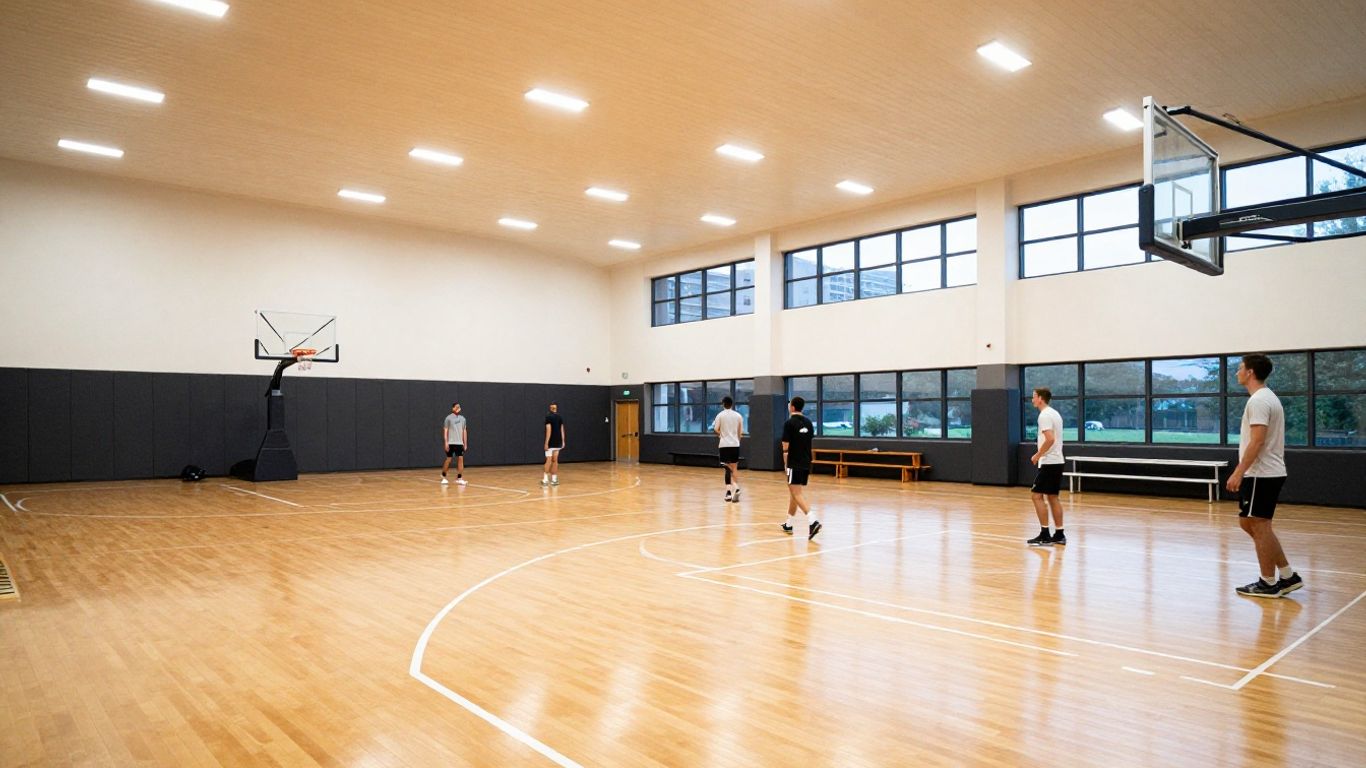
I check the surface, line markings, nets, hoops, backboards, and surrounding run-off where those features apply. For basketball, I pay attention to the condition of the floor, the stability of the hoops, and whether there is enough clear space around the court. For racquet sports, I look for an even surface and equipment that appears properly maintained.
Noise and shared space can affect the experience too. A busy multi-court venue may have a lively atmosphere, but it can also make communication harder during a game. If I am choosing a court for a league, I ask whether other activities are scheduled nearby at the same time.
Check equipment, lighting, climate control, and cleanliness
Indoor play is only comfortable when the basics work well. I look for even lighting without distracting glare, a temperature that allows players to focus, and ventilation that keeps the space pleasant. Clean floors, tidy amenities, and well-maintained equipment are practical signs that the venue takes regular use seriously.
I do not expect every centre to feel luxurious. I do expect the facilities to be usable and cared for. If I can visit beforehand, I watch how staff handle equipment and whether the court is prepared between sessions. Those small observations can tell me more than a polished photo gallery.
Compare locker rooms, parking, and other amenities
Amenities matter most when I am spending several hours at a venue or bringing a group. I compare the availability of change rooms, toilets, showers, seating, storage, and refreshments. I also check parking costs and whether the entrance is easy to find, particularly for evening sessions.
A venue with fewer extras may still be the better choice if it has dependable courts and simple access. I weigh the facilities against how I will use them, rather than paying more for features that my group will not need. That keeps the comparison grounded in the actual playing experience.
Look for safety standards and accessibility features
I look for clear walkways, secure equipment, suitable padding where relevant, and staff who know how to respond if something goes wrong. I also check whether emergency exits and first-aid arrangements are clearly managed. I do not need to turn a court visit into an inspection, but basic safety should be easy to recognise.
Accessibility deserves the same practical attention. I ask about step-free routes, accessible parking, toilets, seating, and the ease of moving between the entrance, court, and amenities. If information is missing, I contact the facility rather than making assumptions about what a photograph shows.
Confirm access, reservations, and costs
A court can look ideal online and still be unavailable when I need it. Before I commit, I check how access works, who can book, and what the displayed price includes. I pay close attention to recurring membership conditions and charges that appear later in the booking process. Clear answers at this stage prevent awkward surprises on the day.
Understand drop-in, membership, and booking options
I check whether the venue accepts walk-ins, requires advance reservations, or limits certain sessions to members. Drop-in play may be convenient, but it can also depend on space being available when I arrive. A membership may offer better access, although I compare the commitment with how often I realistically expect to play.
I also ask whether bookings are made online, by phone, through reception, or through a club administrator. If I am arranging a league or group session, I confirm who is responsible for the reservation and whether all players need to register separately.
Check court rental rates and additional fees
I look beyond the headline court price. Some venues charge by the hour, some by the session, and others use different rates for peak and off-peak periods. I check whether equipment hire, lights, guest access, coaching, or casual entry costs extra.
A small table helps me compare the practical cost without pretending that every venue uses the same pricing structure:
| Cost detail | What I check | Why it matters |
|---|---|---|
| Court hire | Hourly or session-based rate | Shows the basic booking cost |
| Peak pricing | Evening, weekend, or holiday rates | Helps me compare the time I actually need |
| Membership | Joining fee and ongoing charge | Reveals any longer-term commitment |
| Extras | Equipment, lights, guests, or coaching | Prevents unexpected additions |
After that comparison, I can decide whether the cheapest listed option is genuinely the best value. Sometimes a slightly higher rate includes equipment, better access, or a more suitable time, which may make it the simpler choice.
Review cancellation and guest policies
I read the cancellation rules before paying, particularly for a booking made well in advance. I check the notice period, whether refunds are offered, and what happens if the facility closes or a session is cancelled. I also confirm whether I can transfer a booking to another player or date.
Guest policies are easy to overlook when I am booking for a regular group. Some venues require guest names, waivers, or separate registration. Knowing that early means I can give teammates and visitors the right instructions instead of sorting it out at reception.
Reserve popular time slots in advance
Prime evening and weekend sessions can disappear quickly, especially when a venue supports local leagues or coaching programmes. I reserve early when the timing matters, then save the confirmation and any access instructions. For a recurring booking, I ask whether the facility offers a block booking or season schedule.
I still avoid reserving more than I can use. A realistic schedule is kinder to my budget and gives other players a fair chance to access popular times. If plans change, I cancel promptly and follow the venue’s stated process.
Compare courts for different sports
Different sports create different search priorities, even when they share an indoor facility. I look at the markings, dimensions, equipment, ceiling height, lighting, and surrounding space rather than assuming a general sports centre will suit every activity. The best indoor courts finder results become more useful once I know which details matter for my sport. I also consider whether the venue supports casual play, coaching, or organised competition.
Find indoor tennis and pickleball courts
For tennis, I check the court surface, net condition, lighting, ceiling clearance, and whether the venue offers singles and doubles bookings. I also look at racquet hire, ball availability, coaching, and the booking length. A facility with several courts may be more useful if I regularly play with different partners.
Pickleball requires its own checks even when lines can be added to a shared space. I confirm the court layout, net arrangements, session format, and whether the venue separates social play from organised games. I also ask whether equipment is supplied or whether I need to bring a paddle and balls.
Locate basketball and volleyball facilities
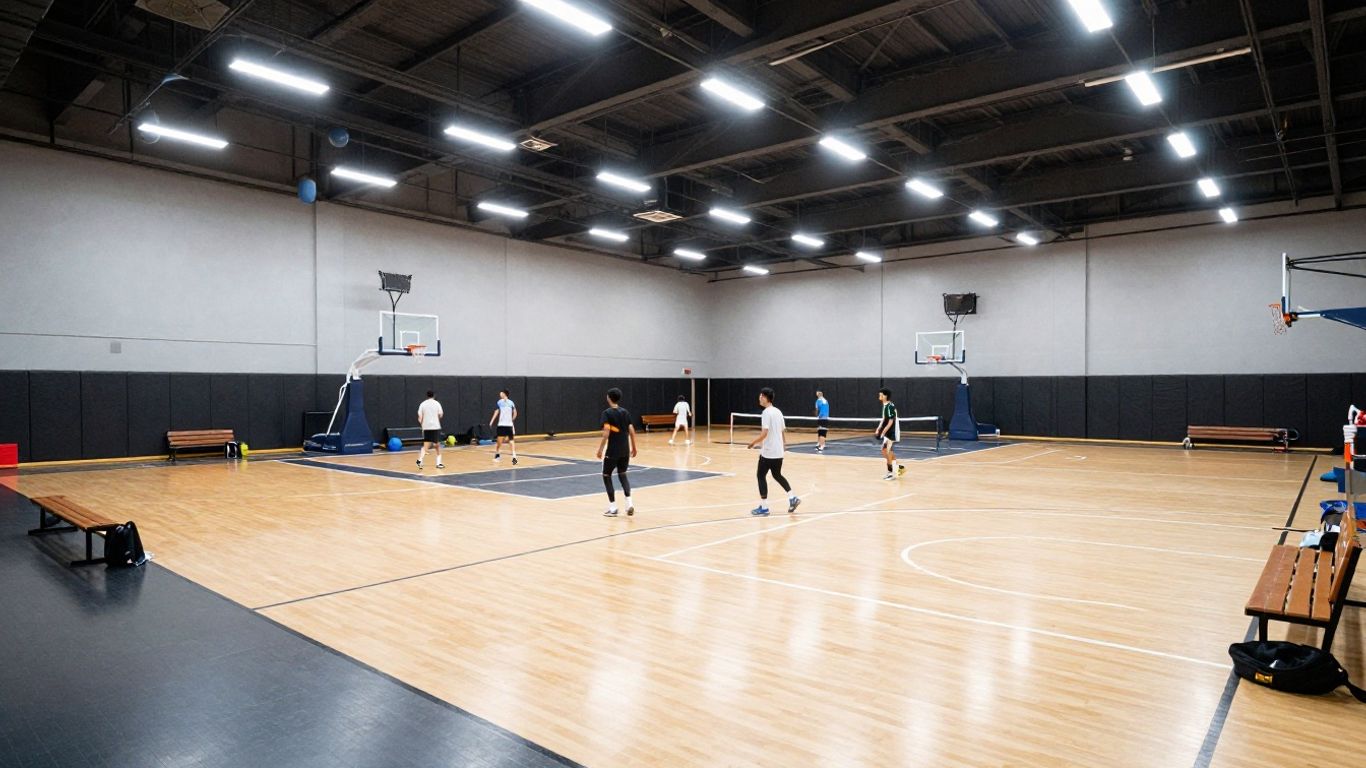
For basketball, I check the number of hoops, court size, floor condition, lighting, and whether the venue supports full-court or half-court bookings. I also look for league fixtures, social sessions, and open shooting times if I want to play with others rather than hire a court privately.
For volleyball, I confirm net height, court markings, ceiling clearance, and whether the venue provides posts and other equipment. The arrangement of surrounding courts matters too, since nearby games can affect space and concentration. I ask about team registration if I am searching for a regular competition.
Search for indoor soccer and multi-sport centers
Indoor soccer venues may describe themselves as sports centres rather than courts, so I broaden the wording of my search. I check the playing surface, goals, pitch dimensions, team sizes, changing facilities, and whether games are social or competitive. Some venues focus on scheduled leagues, while others offer casual hire for groups.
Multi-sport centres can be convenient when a group has different interests, but I verify which spaces are available at the times I need. I also check whether a shared booking includes equipment, staff supervision, or access to particular amenities. The label alone does not tell me how flexible the facility will be.
Identify courts for racquet sports and specialized activities
For badminton, squash, table tennis, and other specialised activities, I search using the exact sport and the local area. I check court dimensions, wall or ceiling clearance, lighting, surface, equipment hire, and whether the venue runs social sessions. Some activities rely heavily on club timetables, so the public booking page may not show every option.
I also confirm the expected skill level and dress requirements. A venue may have an excellent court but offer only advanced sessions at the time I am free. Matching the activity, format, and standard of play makes the search more useful than choosing purely by distance.
Make the most of your court search
Finding a suitable venue is an ongoing process, especially when timetables and local programmes change. I keep my shortlist practical and update it when a court no longer fits my schedule. I also treat reviews and listings as clues rather than guarantees. That approach leaves room for real-world details that search results cannot capture.
Contact facilities to confirm key details
I contact the venue when an answer affects whether I can use the court. My questions are usually straightforward: Is the court available at the stated time? Is casual play allowed? What is included in the price? Do I need to register, bring equipment, or arrive early?
I keep the reply or note the name of the person who helped me if I am arranging a group booking. Clear communication is particularly useful for league fixtures, accessibility requirements, and bookings made around public holidays. A few minutes of checking can save a wasted trip.
Read reviews without relying on ratings alone
I read recent reviews for recurring details rather than focusing on the average rating. Comments about court condition, staff communication, parking, cleanliness, noise, and booking problems are more useful to me than a single enthusiastic or critical sentence. I also check whether the review describes the same activity I plan to do.
Reviews can become outdated, and people notice different things. I use them to form questions, then compare the comments with current information from the facility. This gives me a more balanced view of what to expect.
Save favorite courts for future bookings
When I find a venue that works, I save its website, booking page, phone number, and location. I record the court type, useful session times, pricing notes, and any membership requirement. This turns a one-off search into a small personal directory that I can use when organising the next game.
I also note why a venue suited me. Perhaps the parking was easy, the court had good lighting, or the social session matched my level. Those details help me return to the right place instead of starting the entire search again.
Reassess your options as schedules and needs change
My best option can change when my work hours, transport, playing group, or preferred sport changes. I revisit saved venues when a season ends or a new local programme begins. I check the timetable and prices again rather than assuming that last season’s information still applies.
I also remain open to trying a different court occasionally. A new venue may be closer, quieter, more accessible, or better suited to the way I play now. The indoor courts finder is most useful when I treat it as a starting point for a decision, not a substitute for one.
Conclusion
I find the right indoor court by starting with my actual playing needs, searching with specific terms, checking the facility details, and confirming access before I book. A careful comparison of location, court quality, cost, policies, and availability makes the final choice clearer. With a short, current list of suitable venues, I can spend less time searching and more time playing.